


The postcard shown in the historical photo depicts the Venetian Walls of Upper Bergamo at a time believed to be between the late 19th century and the first decade of the 20th century. The section shown is that of the so-called Bastions of Santa Grata; from right to left, one can see: the Cortina di San Giacomo, the Piattaforma
di Santa Grata (central projection), the Cortina di Santa Grata, and the Baluardo di San Giovanni (last projection), within which lies the casemate of the same name.
At the level of the village, within the city walls, stands what was known at the time as the Spalto delle Cento Piante, one of Bergamo’s major tree-lined public promenades, which has existed since 1795.
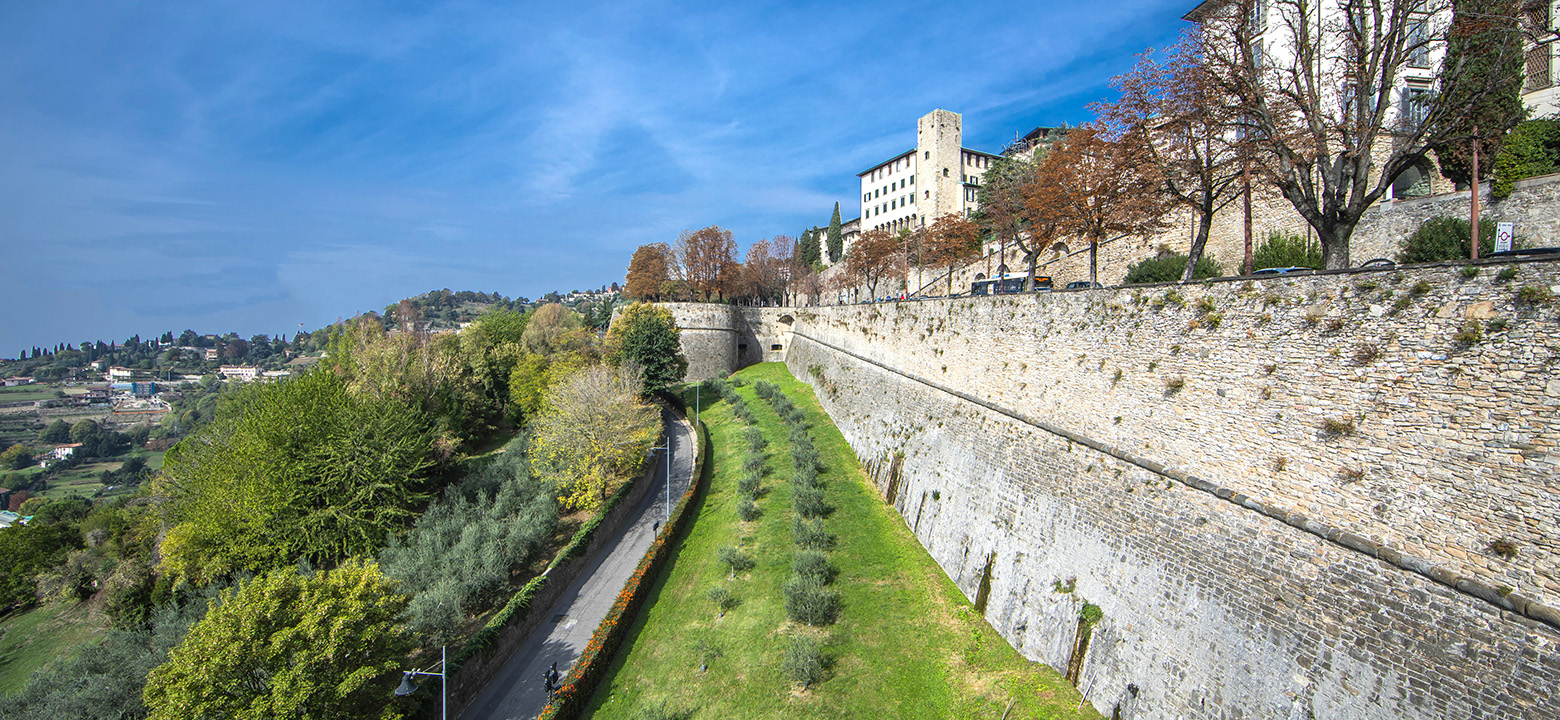
What does this section of the wall look like today?
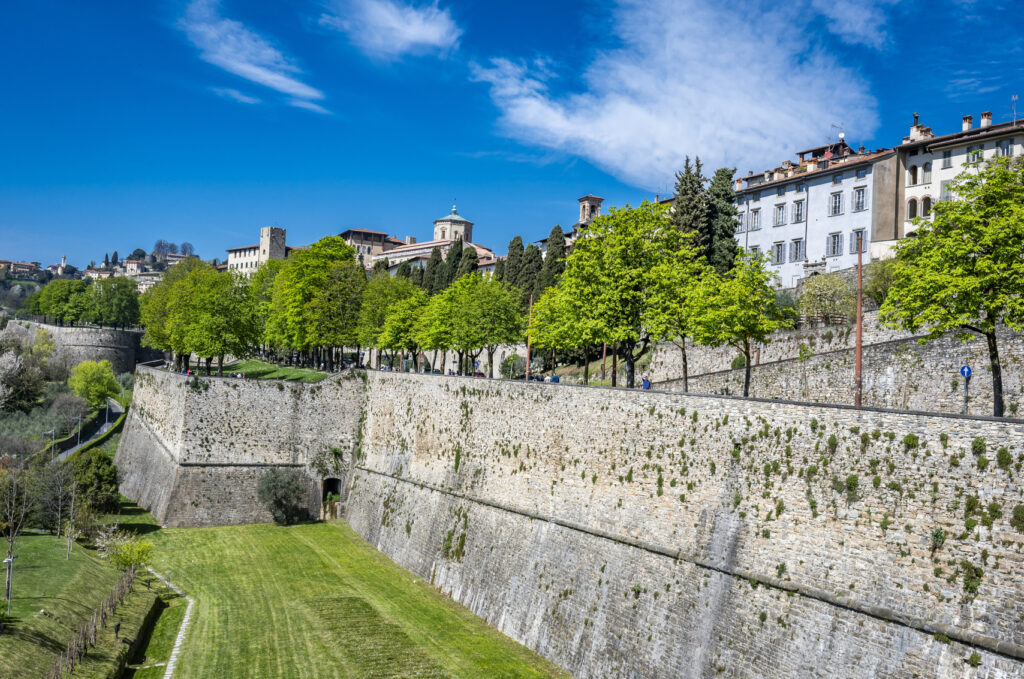
Bergamo would not be the same without its city walls: an imposing masterpiece of civil engineering that, at the end of the 16th century, profoundly transformed the city’s appearance to become part of the broader defensive system built by the Republic of Venice across all its territories. This curtain of stone, earth, and rock has protected the old town for four centuries without ever being attacked, constantly maintained by the people of Bergamo to preserve its functionality and beauty.
Compared to the early 20th-century photograph, the only noticeable differences do not concern the walls themselves but rather the green spaces at their base, which have largely been developed for private use over the past century. Tree-lined gardens have replaced the vegetable gardens, traces of which remain only in the Municipal Gardens, which are periodically assigned to citizens and associations that request them.
The horse chestnut trees of the Spalto delle Cento Piante still tower overhead; over time, the tree-lined avenue has been extended to cover the entire Viale delle Mura.
Since 2017, the Venetian Walls have been a UNESCO World Heritage Site as part of the serial and transnational site “The Venetian Defense Works of the 16th and 17th Centuries: Stato da Terra – Stato da Mar Occidentale.” This international recognition highlights the strategic, architectural, and landscape value of the defensive system built by the Venetian Republic.