


“I stood there spellbound; it was a patch of the most beautiful Italy, one of the many little surprises of enjoyment for which it is worth traveling” (H. Hesse)
Lower Town is developed around the hills of Upper Town and its central point is Porta Nuova, the fulcrum of daily life for Bergamascans. Modern and elegant, it is the center of active life: always on the move, never hectic.
Among the main attractions to see in Lower Town are:
The main street of Lower Bergamo is undoubtedly Viale Papa Giovanni XXIII, which connects the train station to Porta Nuova and is the central axis of the city, dotted with stores, cafes and restaurants. From here branch off the most popular streets for shopping such as Via XX Settembre and Via Sant’Alessandro, ideal for a stroll among boutiques and historic stores.
Bergamo Alta represents the historic heart, perched on hills and surrounded by the Venetian Walls, with medieval atmospheres, cobbled alleys and ancient monuments such as the Piazza Vecchia and the Basilica of Santa Maria Maggiore.
Lower Bergamo, on the other hand, is the modern, flat part, developed between the 19th and 20th centuries, characterized by tree-lined avenues, wide squares, Art Nouveau architecture and a vibrant cultural and commercial life.
While the Upper City fascinates with its history and views, the Lower City captivates with its vitality, shopping and contemporary events.
Lower Town (Città Bassa) is well connected by the train station, the arrival point for those traveling by train, and served by numerous city and suburban bus lines that depart right from the square in front of the station.
The center is ideal for exploring on foot. You’ll find yourself strolling through the modern heart of the city, in the Piacentinian Center: an elegant architectural complex designed in the early 20th century by Roman architect Marcello Piacentini.
Bergamasks are wont to stroll along the Sentierone, particularly on Sunday mornings. They stop for breakfast with cappuccino and brioche or a delicious pastry in the elegant quadriportico and then wander the shopping streets in search of the best shop windows.
Near the Sentierone, you will discover the renovated Dante Square with its balanced geometries and playful perspectives. It is overlooked by the Prosecutor’s Office building and the Chamber of Commerce building. In the center is the beautiful Triton Fountain by Gian Battista Caniana.
Hidden beneath the surface of the square is theformer Albergo Diurno. Originating as an air-raid shelter and becoming a popular meeting place in the post-World War II period, it has now recovered its former glory as a cultural and recreational hub.
The adjacent square, is named after Vittorio Veneto. You will see soaring the Torre dei Caduti, a monument to the memory of the Great War. Inside it, along the stairs that lead you to the viewing terrace, is the story of the history of the Piacentine Center. The view from the top is breathtaking.
For those who wish to reach the Upper Town, there is the historic funicular railway which quickly connects the two parts of the city, while also offering an atmospheric panoramic experience
Stretching out towards the plains or valleys, there are 5 main historic villages and like the fingers of a hand they branch out from Upper Town in different directions. Each with its own distinctive character.
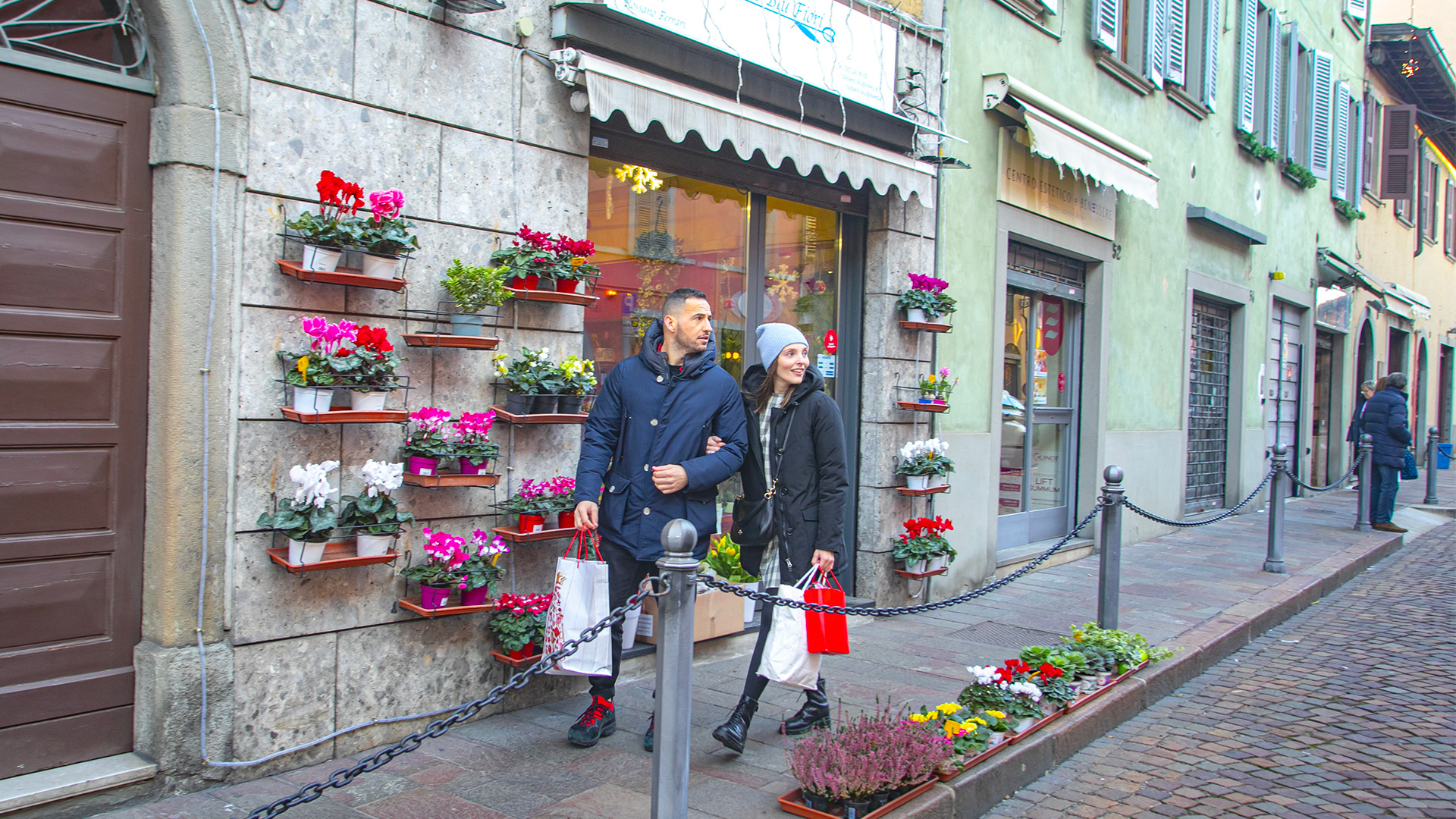
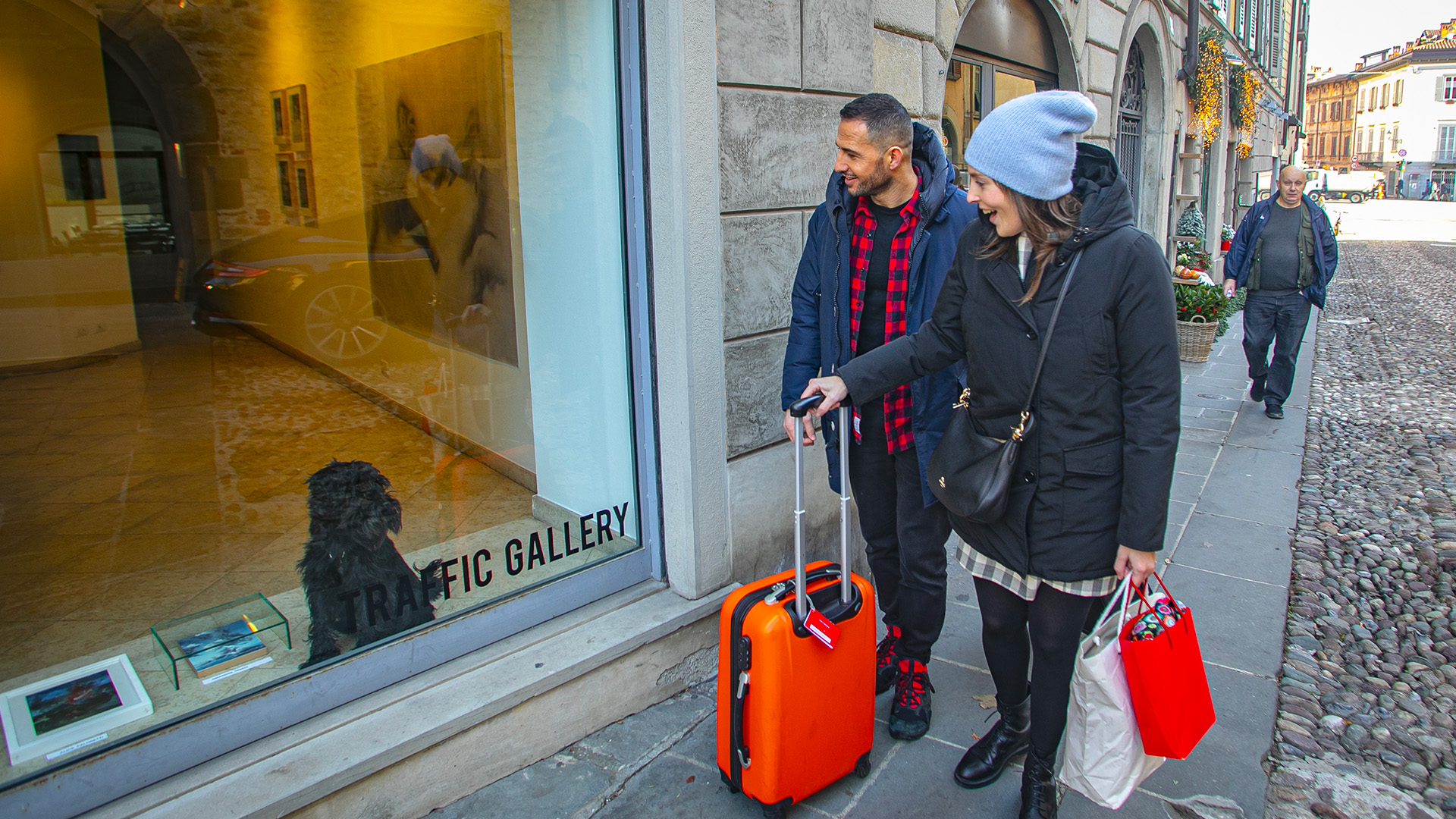
Borgo Pignolo is the noble village with its ancient buildings, fine crafts and art galleries. San Tomaso, which connects the town to the Seriana and Brembana valleys, along with Borgo Santa Caterina, are lively neighborhoods, the former housing art museums while the latter, also known as the Borgo D’Oro, has received the nomination as Italy’s Most Beautiful Village and fully represents the spirit of Bergamo, from the bright colors of the shop windows to the aromas of the delicatessens, from the evening nightlife to the historic buildings.
Borgo San Leonardo, a historic intersection of five major thoroughfares and Bergamo’s cult spot, with its Piazza Pontida is the perfect place for happy hour. Borgo Sant’Alessandro you meet as you descend through the gate of the same name, the austere and elegant upper part then leads you to a riot of stores, in the heart of the city’s shopping.
Not to be forgotten is Borgo Palazzo, two souls divided by Piazza Sant’Anna, a more traditional one with typical restaurants and artisan stores and a more multiethnic, colorful one overflowing with exotic stores and venues.
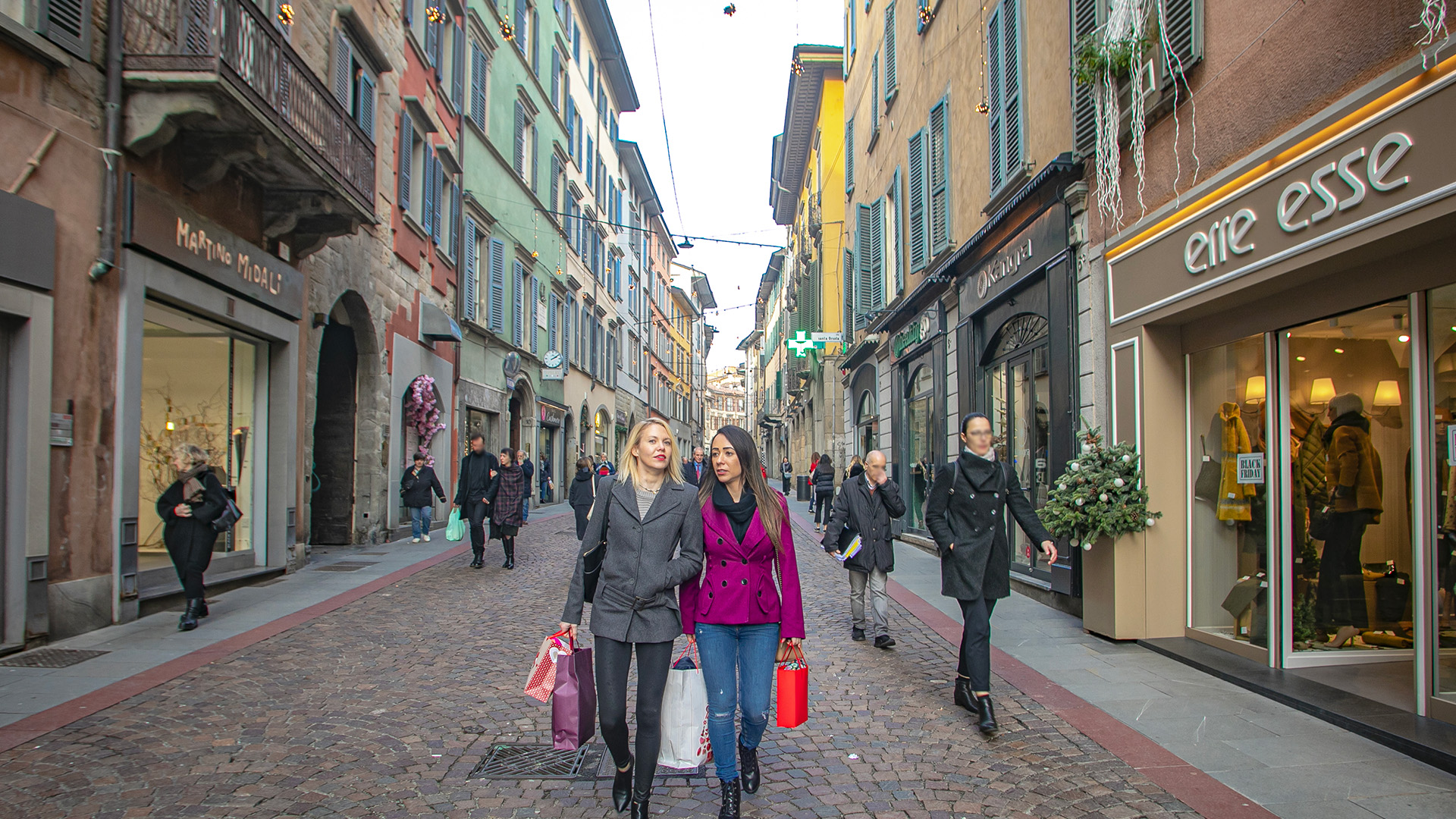
Between Via Sant’Alessandro, Via Borfuro, Via Sant’Orsola and Via XX Settembre is the “bergamasque fashion quadrilateral“. You can find everything: the stores of the big international chains and stores with a more sophisticated flavor.
Shopping is also squared in Via Tiraboschi, Via Tasso and Via Pignolo, and you can go as far as Via Borgo Santa Caterina and Via San Tomaso.
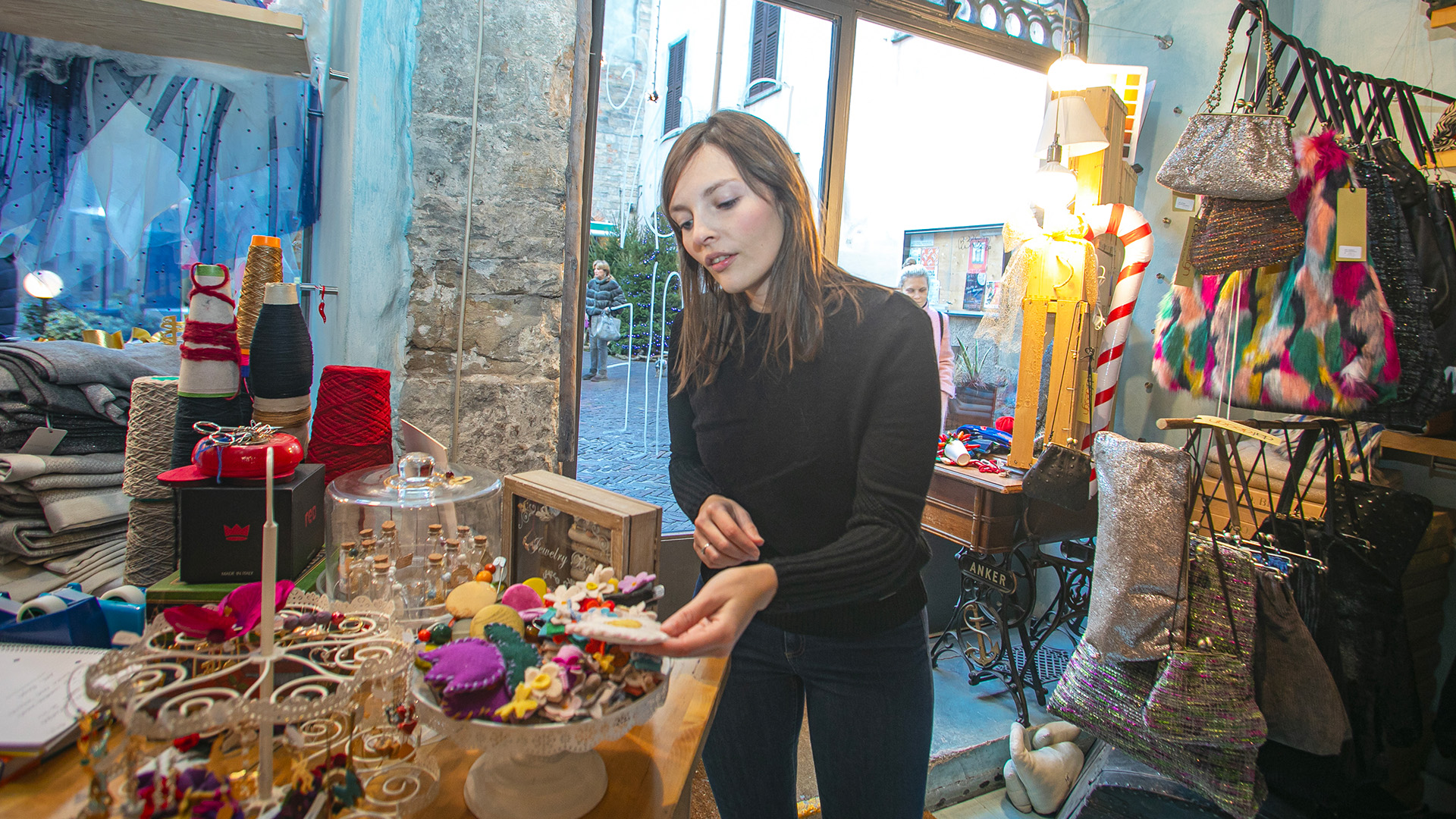
In addition to fashion, you will also find numerous historic stores of long family tradition, linked to the area by birth or vocation or the artisan workshops where you can discover real treasures of“handmade.”